Showing posts with label Brazil. Show all posts

Tuesday, 7 January 2014

TUBARÕES – Risco nas praias de Recife

Recife é uma das 12 cidades brasileiras que vão receber os jogos da Copa Mundial de Futebol de 2014. Capital do Estado de Pernambuco, Recife é famosa pela arquitetura, diversidade cultural e belas praias. 

É alí, na região metropolitana de Recife, que está localizada a mais longa praia urbana do país, além de famosas praias como Porto de Galinhas, várias vezes eleita a mais bela praia do Brasil.

Mas as águas mornas do litoral recifense abrigam um outro recorde, que não deixa a capital pernambucana nem um pouco orgulhosa. O de litoral mais infestado por tubarões do Brasil. Até hoje foram 59 ataques, com pelo menos 22 vítimas fatais, nos últimos 21 anos, quando os incidentes começaram a ser contabilizados.

CAUSAS
O biólogo e professor da Universidade Federal Rural de Pernambuco Fábio Racin explicou que a 
construcão do Porto de Suap em 1992 é umas das principais causas dos ataques. De acordo com Rancin, o porto, junto com dois canais que aprofundam as águas da costa recifense, tiram os animais da sua rota natural de migração.

Rancin informou que a Universidade Federal Rural de Pernambuco desenvolve um trabalho de pesquisa para manter os tubarões afastados das praias do Recife. O trabalho consiste em estudar os hábitos dos animais, que são capturados e marcados com localizadores eletrônicos e depois  soltos em alto mar para que retornem às suas rotas migratórias. 

Fábio Racin disse ainda que até hoje, dos 84 tubarões monitorados pela universidade, apenas dois voltaram a se aproximar das praias do Recife, provando que o extermínio dos tubarões não é a resposta para acabar com os ataques no litoral pernambucano. 

RESTRIÇÃO
O governo local demarcou as áreas de risco e já proibiu a prática de esportes náuticos nas praias do Pina, Boa Viagem, Piedade e Candeias onde a maior parte dos ataques aconteceu. As autoridades agora discutem a possibilidade de proibir também a entrada de banhistas nas águas destas praias. 

A restrição deve ocorrer pelo menos nos meses de junho e julho, período mais chuvoso do litoral pernambucano, quando a água do mar fica turva levando os tubarões a confundir os banhistas com peixes grandes e outras presas naturais.

Uma solução definitiva, no entanto, ainda está longe e os salva-vidas da capital pernambucana reforçam que os banhistas devem obedecer a sinalização e seguir suas orientações nos locais para evitar novos ataques. 

Wednesday, 24 July 2013

Brazilian MP's are the most expensive in the world - I protest against it

Raphael Michilis Fonseca

R$ 33 millions (£9,62 millions) is the annual cost of a Senator in Brazil. A member of the lower house of the Brazilian Congress, Chamber of Federal Deputies, costs R$ 6,6 millions (£1,92 millions) a year to the taxpayer. R$10,2 millions (£2,97 millions) is the average annual cost of an MP in Brazil, the most expensive in the world, according to a study by 'Transparencia Brazil Institute.'

To have an idea of how tragic it is to the country, remember that the Brazilian Senate has 81 chairs, while the lower house is composed of 513 federal deputies.


Now it gets graphic and you may not want to read it as it may make you sick.

    81

+513
  594 x £2,97mi = £1,76bi/year


Shouldn't the protesters in Brazil be asking (better, demanding) the MP's to cut their own earnings down?

They are not the only ones in the Brazilian government sphere to earn absurd sums of money to do nothing or even work against people's interest.Compare it with how the MP's live in Sweden and you'll see how disgusting it is to have to pay for the politicians's luxury.

Watch the video for more details, in Portuguese though.

Think about it. 

Also compare:

The minute 'worked' by a Brazilian MP costs R$ 11,545.00 to the tax payer, who earns a basic monthly salary of R$ 678.00. 

MP              R$ 11,545.00 /MINUTE

Taxpayer       R$ 678.00 / MONTH

Wednesday, 10 July 2013

University investigates 198 students involved in racist prank in Brazil

Raphael Michilis Fonseca

A group of university students are being accused of racism, sexism, and prejudice in Brazil.

Student painted in black during prank. The sign reads: Rookie Chica da Silva. 
Chica da Silva was a slave that  became famous for having an affair with her 
master, who later freed her. Through that relationship she gained prestige,
 financial and influential power
They are subject of an internal inquiry at the Federal University in the estate of Minas Gerais UFMG. 

The 198 graduate students are suspect of involvement in a prank that made references to slavery and Nazism.

The administrative process opened by the university against the students,
Here Xica da Silva, born in the
same state where the prank
took place, was made into a 
TV soap opera character. 
however, only investigates their involvement in selling and distributing alcohol during the prank event which took place last March 15.

At least half of the students investigated in the case, 99, are rookies who suffered the prank. 

The University did not explain why the words racism, sexism, prejudice, slavery and Nazism were not included in the process.


Pranking events are traditional in universities all over the country and happens every semester as an initiation/welcome ritual. 

Severe university pranks in Brazil have gained media attention in several other occasions, when students who couldn’t swim died after being thrown into swimming pools for instance.

Tuesday, 18 June 2013

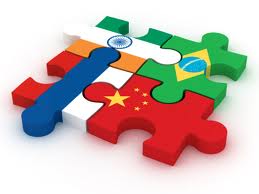
BRIC - Desaceleração econômica pode tirar Brasil do grupo

Raphael Michilis Fonseca

O Brasil pode perder sua cadeira no clube de países emergentes BRIC. A ameaça é anunciada pela TV Americana CNN, que reúne hoje representantes das Nações Unidas, Organização para o Desenvolvimento e Cooperação Econômica e a Google em um debate online, através do Twiter, para discutir quais países sairão vencedores na corrida para escapar da crise financeira mundial.


A CNN vai discutir se os membros do BRIC, bloco formado por Brasil, Russia, China e India, ainda têm chance se tornarem líderes econômicos globais e heróis da recessão que já dura mais de cinco anos.  

De acordo com a CNN, a desaceleração do crescimento econômico dos membros do BRIC, bloco formado por Brasil, Russia, China e India, ameaça a esperança de eles se tornarem líderes econômicos globais e heróis da recessão que já dura mais de cinco anos.

O alarme soa ainda mais alto para o Brasil. Com um crescimento econômico abaixo de 1% em 2012, o menor entre os integrantes do BRIC, a CNN questiona se o país sequer merece ser incluído no grupo.

E a TV já aponta quais países devem tomar o lugar do BRIC como novo destino para investimentos internacionais. Daqui para frente os holofotes devem apontar para o Vietnam, a Indonésia e os países africanos ao sul do Sahara, com previsão de crescimento de até 5,6% este ano, desempenho bem acima da media global. 

Tuesday, 5 February 2013

Brazilian phone maker takes a bite out of Apple

Gradiente wins exclusive right to the iPhone brand name
Raphael Michilis Fonseca


The Brazilian IPHONE was launched in December 2012
and had been registered since 2000, seven years before
 Apple launched its first smartphone
The Brazilian National Institute of Industrial Property (INPI) has given Gradiente the exclusive right to use the iPhone brand name in that country. The INPI's decision will be officially released in the magazine Revista da Propriedade Intelectual on 13 February. 

Now it is up to the Gradiente to decide whether Apple can continue using the iPhone brand in Brazil.

Neither company has yet released a public statement concerning the INPI's ruling. 

The Brazilian electronics manufacturer, controlled by IGB Eletrônica, registered the brand name in 2000, seven years before Apple launched their game changing device that has since gone on to earn the company billions. The registration gave Gradiente  came with a launching deadline of january 2013
In order to maintain exclusive rights to the brand, Gradiente was required to launch its IPHONE by January of this year. The company just beat the clock by releasing it in December 2012, just one month before the deadline.  

This is not the first time Apple face legal battle over its biggest brand name. It already had to make deals with Cisco, who held the rights over the name in the USA.

The company founded by Steve Jobs filed registration of the brand in 2006, 2007, 2010 and 2011. Two years ago Apple obtained authorization to market the name linked to shoes, clothing and instruction mauals. 

Monday, 28 January 2013

Four arrested in connection with nightclub fire that killed more than 230 in Brazil

Raphael Michilis Fonseca
Police arrested four people connected with the nightclub fire that killed 231 in Santa Maria, southern Brazil. Officials did not reveal the names of the detainees, but reports say they are the two co-owners of the club, Mauro Hoffman and Elissandro Spohr, and two members of the band Gurizada Fandangueira. Some reports also say the chief of security was among the arrested.

The suspects are being temporarily held for five days while police carry out investigation into the blaze. The imprisonment can be extended for five more days until the incident is clarified, Brazilian police said.

Brazilian authorities say the final answer to who are the responsible for the fire in the nightclub will hardly be found in less than 30 days of investigation.

The club owners argue that the establishment had been inspected by a fire marshal and had a temporary authorisation to be open. Police informed they suspected the owners of the Kiss club could be getting rid of evidences.

A BROADER VIEW

Now Brazilian population asks for a broader investigation into who are the responsible for the tragedy. Through social media and comments in news websites they claim that authorities should also to be investigated. 

The journalist and Doctor in Political Science, Leonoardo Sakamoto, also argues that the lack license is not an automatic answer to find the culprit for this episode that left the country standing still.
He says in his column on www.uol.com.br that long bureaucratic processes and corruption play a major part in irregularities in licensing businesses in Brazil. 

According to Sakamoto there is a well known mafia installed around the processes of emission and inspection of licenses to bars, restaurants and nightclubs in Sao Paulo and many other cities in Brazil. He also says it is almost impossible to clean public service from those mafias.

“The fact is that any mayor that try to change this reality, simplifying e digitalizing the process to obtain certificates and licenses and punishing public workers involved in corruption is more likely to fall before manage to tackle the mafias”, said  Sakamoto.

On the other hand of the discussion, yesterday, Sao Paulo Mayor's Office announced a meeting with nightclub owners to revise licensing legislation and inspection in the city. Control of attendees, and emergency exit are two of the main subjects Sao Paulo officials want to discuss with club owners.

Sao Paulo's director of the Venues' Use Control, Silvio de Sicco, said his department has only 19 engineers, but they were enough to do the licensing and inspection work.


"I'd like to have 200 people, but the ones I have are enough, because they are exclusively focused in that activity," said de Sicco adding that periodical inspections are done in nightclubs in Sao Paulo with priority on those that congregate more people and serve alcohol. 

The meeting date is not set yet and does not aim to change the current legislation, as the mayor's office say they are enough. The idea is to hear entrepreneurs's opinions on how to enforce them more efficiently, said Nunzio Briguglio, Sao Paulo's Communication Secretary. 

Club where 231 died in inferno did not have license

Raphael Michilis Fonseca
One of the owners of the nightclub Kiss in Brazil, where 231 people died in a fire yesterday, admitted to the police the establishment’s license had expired since august 2012. 

The owners of the club were identified as Mauro Hoffman and Elisandro Spohr, but the police did not reveal which of the business partners spoke to them. Brazilian authorities haven’t confirmed yet if the business partners will be detained as suspects of manslaughter. 

According to the chief police Sandro Meiners, the owner said the club had already filed process to renew its license. Meiners said he would check why the license had not been granted by then.
 

Besides the license to open, the club’s certificate of Fire Prevention Plan was also expired, according to the National Civil Defence Secretary, Colonel Humberto Viana. 

Rodrigo Lemos Martins, member of Gurizada Fandangueira, who played at the venue told local media that the fire started when the group lit up a flare that ignited the flames in the insulation material on the ceiling.

Martins also said another member of the band tried to put off the fire with help from security staff, but the fire extinguisher did not work.


The club had only one exit and reports say that, at some point during the fire, security staff did not allow customers to leave the premises. This could be the reason why many of the victims ran to toilets.

Sunday, 27 January 2013

Number of people killed in a nightclub fire in Brazil falls to 231

Raphael Michilis Fonseca
Official number of fatal victims in the nightclub fire in Brazil fell from 245 to 231, after Police revised the counting of bodies. The police, however, say they finish retrieving, counting and identification of the corpses.

Most of the victims were young students and, according to Police chief Sandro Luís Meinerz, they were killed by inhaling toxic fume from the burning of the acoustic insulation, rather than the fire itself.

He also said all the bodies are in good conditions for identification.

The fire at The Kiss nightclub in the university town of Santa Maria, was the biggest in the State of Rio Grande do Sul and the second Brazilian history.

Brazilian President Dilma Rousseff returns to the country after fire kills 245 in a nightclub

Tragedy in Brazil raises questions about whether the country is ready to host the world Cup and the Olympics

Raphael Michilis Fonseca
Witnesses say some victims couldn't find the only emergency
exit in the club and got trapped in the toilets 
Brazilian president Dilma Roussef cancelled her participation in a Latin American summit she was attending in Chile and returned to Brazil where she already stated her support to the victims of the blaze and their relatives.

“We will use all the resources to recover the bodies and give assistance to victims and the local services. It’s a sad Sunday, but I’d like to say to the population of Santa Maria and whole Brazil that we are together and of course we will do all that is possible to assist Santa Maria,” said Rousseff.

Besides mourning and comforting the victims’ relatives, the president might have to answer to questions  concerning the health and safety standards in the country.

Media around the world is broadcasting images of rescuers breaking walls to reach the victims of the Fire in the student town of Santa Maria and questioning if Brazil is ready to host big international events such as the World Football Cup next year and the Olympic Games in 2016.

BBC correspondent in Brazil Gary Duffy questioned how Brazil copes with emergencies and the priority given to health and safety in the country.

Zero Hora Brazilian newspaper reporter Carlos Ferreira told BBC the country needs to make improvements in infrastructure like electric installations.

Cause
Although authorities still investigate the cause of the fire, some witnesses confirmed the accident was caused by the fire displayed on stage by the band who was playing at the club.

“The band started using fire on the stage and one of their members lit and pointed a fire artefact to the air. The ceiling caught fire and it spread in a fraction of seconds,” said Michele Pereira, 34, who was next to the stage during the gig.

The incident turns the attention to how serious Brazil is about licensing venues and inspecting their commitment to health and safety.

It is still not clear if the band had authorization to use fire works inside the club nor if the emergency exits in the venue complied with safety regulations.

Nearly 250 killed in a fire at a nightclub in southern Brazil

Raphael Michilis Fonseca
Brazilian authorities confirmed the number of victims killed in the at The Kiss club in Santa Maria, south Brazil, reached 245. Around 200 other people were injured and at least 50 are still hospitalized.

Bodies started being identified and the first list was already displayed at the entrance of the sports centre which is serving as temporary morgue in the student city of Santa Maria.

This is the second biggest fire in Brazil's history, after another incident killed 503 in a circus in 1961.

180 die in nightclub blaze in Brazil


Raphael Michilis Fonseca
Officials confirmed at least 180 people died in a nightclub after insulation caught on fire.
Fire fighters say most victims died asphyxiated by the smoke, and more than 200 were injured in the accident.  

The tragedy started around 2 am, when the acoustic insulation caught fire at the nightclub The Kiss in the university city of Santa Maria in southern Brazil.

The cause of the fire is still unknown, but witnesses say The Kiss club had a 
pyrotechnics show while a band performed.

Other reports say the number of deaths might have already reached 220 in what is considered to be the worst fire disaster in Brazil’s History.

Thursday, 24 May 2012

Free gifts make number of Wrapp users expand 66% in two months

By Raphael MichilisWrapp, the Swedish social e-gifting start-up, has enjoyed a phenomenal April and May.

By the end of May, Wrapp had attracted nearly 250,000 users, an increase of 100,000 compared to the end of March.

In the past two months, Wrapp users gifted 700,000 digital vouchers to friends via Facebook; in the first quarter of 2012, total Wrapp gifts totalled 1m.

In the US, Wrapp has enjoyed early success. Since launching last November, the app has featured in the top 25 Apple iTunes chart in the social networking category.

Wrapp was founded in 2011 and has attracted investment of USD10.5m, including backing from Niklas Zennström, Skype co-founder.

At the time of joining the Wrapp board of directors last year, Zennström said in a statement:

“Wrapp is targeting a huge market by leveraging two mega-trends: social networks and smartphones.”

In addition to selling gift cards from major retailers, Wrapp permits the user to send digital vouchers to friends via Facebook for free.


Free gift cards are uploaded everyday to the application by partner retailers, helping to boost Wrapp popularity.

The social gifting craze is attractive to merchants as a marketing weapon, as it provides access to customer data that can be used in highly targeted advertising operations.

Wrapp’s marketing highlights that the merchant is also rewarded with a friend-to-friend automated advertising campaign, as “each gift card posted on a recipient’s Facebook timeline or wall is seen by about 80% of their friends.”

According to Wrapp, the associated brands’ average sales are worth around four to six times the value of the free vouchers they provide, helping Wrapp gain popularity among suppliers.

Wrapp has reportedly signed up around 70 major retailers in the US and Europe, with 20 signing up since the end of March.

Global expansion
Already up and running in the US, Norway Sweden and the UK, Wrapp has plans to expand into another a number of other countries including Brazil, Germany, France, the Netherlands, Italy, Taiwan, Japan, Australia and Turkey.

At the end of May, Wrapp kicked of its service in Finland and opened an office in Poland.

The buzz created by the launch of Wrapp has also attracted a competitor offering from a German-based start-up, DropGifts.

DropGrifts' service offers free vouchers and, like Wrapp, allows several users to contribute to a single gift.

The digital vouchers can be converted into meals at restaurants, gym and magazine subscriptions, clothing and many other products and can be redeemed online or in person at a partner retailer.

Wrapp’s coupon is purely digital and cannot be printed, so the receiver has to present a smart device at store to be redeemed. By contrast, the DropGift version can be printed or even posted to the recipient’s home address in a physical version.

Other gift cards apps include US-based FreebeeCards. It went live on 21 May and enables Iowa-based companies to offer free gifts, rewards and discounts in the form of vouchers that can be redeemed via a smartphone or printed.

The value of the first FreebeeCards ranged from USD 6 to USD 1000, exchangeable at Jasper Winery and Farrell’s eXtreme Body Shaping gym club.


Monday, 21 May 2012

Pagseguro, Nokia bring NFC payments in Brazil


By Raphael Michilis
20 April 2012

Brazil’s first commercial NFC mobile payment application will commence in May.

The electronic wallet has been developed by the Nokia Institute of Technology (INdT) in Brazil, and will be available on Nokia’s C7, N9 and 701 smartphones, the Finnish company told.


The solution will be offered in partnership with Pagseguro, a payments company that belongs to UOL, one of Brazil’s largest internet service providers. 

The app enables both retail payments - at bars, restaurants and stores – as well as proximity-based money transfer between users.

Instead of a POS, the Nokia-Pagseguro service requires both merchant and consumer to have a handset with the same application installed.

“The money will be withdrawn automatically from a credit card account, a PayPal account or from any of the other supported payment types”, said Nokia.

Mobile commerce specialist David Eads, founder of Mobile Strategy Partners LLC, is optimistic about the future of m-payments in Brazil and complimented the Nokia initiative in the country. 

“The PagSeguro pilot is interesting because it ties P2P technology to the leading payment products in Brazil. This enables broad payment acceptance from anyone with the application. Unlike other pilots, it also removes the complication of merchant POS hardware,” says Eads. 

“Closed networks like these with economic incentives have a history of succeeding in various emerging markets. For example, BlackBerry Instant Messenger (BBM) thrives in Venezuela because it avoids text messaging fees. Usage exploded because of the network effect once it reached critical mass,” he points out.
He says the economic boom that the Latin American markets are experiencing provides a rich ground for the mobile payments market to grow.

He estimates that there are between 30-40% of consumers across Latin America who are underserved by banks – and this is where mobile money initiatives can generate revenues by serving this segment, he says.

Security
Pagseguro says that rather than being completely automated, the Nokia app will always request the user to enter a passcode before each individual transaction.

“So, in case the handset is lost or stolen, nobody will be able to make payments in the user’s name,” the company explains on its website.

“The recipient types in the amount they are to collect and taps their phone against that of the sender. The amount is shown on the sender’s screen and the transaction can be completed, when both parties agree”, Nokia says.

According to Pagseguro, the extension of the service to other brands will depend on phone makers adapting their handsets to the NFC technology. Nokia sells three NFC enabled models in Brazil: N9, 701 and C7.

Regulation
“The Central Bank of Brazil (BCB) and the Brazilian Communications Ministry are discussing the regulatory aspects of financial inclusion and the security requirements mobile payments in the country,” Aldo Mendes, head of monetary policy for BCB said during Cards 2012 in Sao Paulo in mid-April.

“Mobile ppayment is a global trend with potential to bring sensible benefits to society, with reduction in costs and price, better convenience to users, and improvement of the service standards through the increase of competition.”

“The costs to bring people into the financial system through mobile payments are much lower than expanding the number of bank branches and other solutions that need physical investment in infrastructure, people and other technologies,” Mendes said.

An official outline for the Brazilian mobile payments regulation might be announced in about 90 days.
The Brazilian mobile payments regulation will also guarantee the universality of the service, imposing rules that prevent barriers to new entries, according to Mendes.

Banks and mobile operators will be free to enter the market. Business models will have to permit interoperability “to allow different platforms to communicate amongst each other”, so that different models do not represent a barrier to business,” explained Mendes.

He added that the coming regulation will also ensure:
  • Adaptability, so that “new technologies allow the current payment modalities to co-exist with m-payments”;
  • That contracts and technologies for m-payments in Latin America’s largest country will have the flexibility to allow users to migrate to different operators and handset makers;
  • The prevention of money laundering and protection of consumers’ rights.

Wednesday, 16 May 2012

Sentient Group raises USD 1.3bn and a slice of the funding can go to the Amazon

Hermasa Port, Itacoatiara - Amazon Basin in Brazil
by Raphael Michilis
The Sentient Group, a venture company based in the Cayman Islands, hinted it might fortify its investments in the Amazon basin near Manaus, Brazil.

The capital would be a slice from the USD 1.3bn the company has recently raised in its fourth private equity funding.

“The Fund’s objective is to invest in mine development opportunities globally. As the Fund’s mandate is global, we will look at opportunities in Brazil alongside of any other jurisdiction,” Nicholas Mead, Sentient Partner for Investors Relations, told Money World.

Since 2009, Sentient invests in the private company Brazil Potash Corporation (PBC), who is the chief holder of mineral rights of a major potash district, 400km long.

Sentient did not confirm it already has any plans in place for the potash exploration in the Brazilian Amazon. However, “Brazil Potash Corp. expects to develop its extensive property in the State of Amazonas, Brazil, into one of the world’s largest strategic, scalable and reliable sources of potash,” says the company website.

The potash is mainly used in the production of potassium based fertilizers. The potash deposits explored by PBC are located near major markets and on established shipping routes and ports, that make the area more attractive for the Sentient investments.

In its investment portfolio, Sentient lists iron ore mining Ferrous Resources, also Brazilian, as well as companies from Australia, China, and the neighbour Argentina.

Colcci showcases its name in Mayfair


Raphael Michilis
Brazilian clothing label Colcci is showcasing its streetwear line tomorrow night in Mayfair, London. 


Colcci is the largest brand holder and manager in Latin America, and has already been selling its products in London in the past few years, mainly among the Brazilian expat community.  


Now Colcci wants to gain grounds outside Brazilian geographic and demographic borders.

To spread its name in the fashion world, Colcci made top model Gisele Bundchen the face of its brand since 2005. 


Colcci put American actor Ashton Kutcher together with Victoria's Secret supermodel Alessandra Ambrosio in a spicy campaign that brought the Brazilian label one international step forward, at least within the media.


Steamy: Ashton Kutcher and Alessandra Ambrosio star in a steamy new advertisement for Brazilian clothing label Colcci

Saturday, 12 May 2012

m-payments - Brasil melhor preparado que países europeus


Índice MasterCard classifica o Brasil como ‘principiante’ no uso da telefonia móvel como forma de pagamento, mas mostra o Brasil na frente de países com Alemanha e Franca

Raphael Michilis

O Brasil aparece na 16ª posição do Índice de Preparação para Pagamento via Celular (MPRI na sigla em ingles) criado pela operadora de cartões de crédito Mastercard, publicado esta semana.

O país conseguiu apenas 33,4 da escala que vai ate 100, mas o resultado deixou o mercado brasileiro 0,2 ponto acima da média geral dos 34 países no ranking, que tem a Cingapura em primeiro lugar.

O desempenho foi suficiente para trazer o Brasil a frente de grandes economias européias como Alemanha (19º), França (23º) e Itália (32º), além da vizinha Argentina, última colocada do ranking.

O Reino Unido, oitavo da lista, foi único pais europeu melhor preparado que o Brasil para a operação de m-payments (pagamentos via celular), segundo o índice da MasterCard.


O relatório do MPRI aponta o desconhecimento das alternativas de pagamento móvel como um dos principais fatores impedindo o Brasil de ter uma classificacao mais alta.

O documento sugere que o país precisa implementar iniciativas de marketing e educação para que consumidores brasileiros conheçam os benefícios da modalidade de pagamento.

Segundo o MasterCard, apenas 14% dos consumidores brasileiros está familiarizado com o pagamento via telefonia móvel.

Por outro lado, a intenção de uso do telephone celular como ferramenta de pagamento é curiosamente maior que a familiaridade com o serviço. O índice MPRI mostra que 19% dos brasileiros estão dispostos a provar esta opção.

m-money traz inclusão financeira

O bom desempenho do Kenia no ranking MasterCard é devido ao baixo índice de acesso a contas bancárias. O país é líder mundial em transações com mobile-money (m-money), pagamento e a transferência de dinheiro via telefone celular, e a população keniana é uma das mais familiarizadas com todos os tipos de pagamentos via celular.

O m-money é comum em várias nações africanas, onde a infra-estrutura financeira é precária e grande parte da população está longe dos centro urbanos e agências bancárias, como é o caso da Nigéria.

O especialistas em comércio via cellular e fundador da Mobile Strategy Partners, David Eads, é otimista a respeito do futuro do m-payments no Brasil.

Ele estima que cerca de 40% da população latino-americana não tem acesso a contas bancárias e que a nova modalidade de pagamento vai ser impulsionada pela necessidade de inclusão financeira no Brasil e países vizinhos.

“O boom economico vivido pelo Brasil vai proporcionar um terreno fértil para o crescimento do mercado de m-payments. É aí que as iniciativas em m-money vão gerar lucro, servindo o segmento da população que está à margem do sistema financeiro”, comentou Eads.

Ranking MasterCard


1º          Cingapura 45.6

2º              Canada 42.0
3º   Estados Unidos 41.5
4º                 Kenia 40.4
5º      Coreia do Sul 39.7
6º                 Japao 39.6

e-wallet
Também esta semana, a Mastercard anunciou o lançamento global da PayPass e-wallet Service, uma carteira eletrônica que deve fundir todos os cartões de crédito do usuário em uma ferramenta de pagamento única. A operadora de cartões informou, no entanto, que ainda não tem planos de lançar o produto no Brasil.


REGULAMENTAÇÃO

O relatório da MasterCard aponta o ítem ‘regulamentação’ como um “desafio” para o pagamento móvel no país, mas indica que o Brasil tem feito progressos na área e que “as parcerias parecem estar dando certo”.

Varias empresas dos setores financeiro e tecnológico anunciaram parcerias em recente investimentos em m-payments no Brasil, como são os casos da Nokia com a Pagseguro, e a própria MasterCard com a Vivo.

“O Banco Central do Brasil e o Ministério das Comunicacoes estão discutindo os aspectos regulatórios da inclusão financeira e requerimentos de segurança para o pagamento via telefonia móvel no país”, informou Aldo Mendes, diretor de Política Monetária do Banco do Brasil, durante o evento Cards 2012 em abril.

Mendes informou que o primeiro texto oficial das regras do pagamento via celular (m-payments) no Brasil deve estar pronto em cerca noventa dias, mas que o assunto ainda precisa ser discutido mais a fundo.

A regulamentação dos pagamentos via celular deve garantir a universalidade dos serviços, impondo regras que eliminem barreiras para a criação de novos negócios, explicou Mendes.

Ele acresecentou que os modelos de negócios instalados no Brasil deverão ser interoperacionais, permitindo a comunicação entre as plataformas de diferentes provedores.

A regulamentação brasileira para m-payments deve assegurar:

Adaptabilidade, permitindo que as modalidades de pagamento atuais coexistam com o m-payments;

Que os contratos e as tecnologias dos serviços de m-payments ofereçam flexibilidade, dando liberdade para que o usuário possa migrar entre as diferentes operadoras e fabricantes de celular.

A prevencao da lavagem de dinheiro e a proteção dos direitos do consumidor.